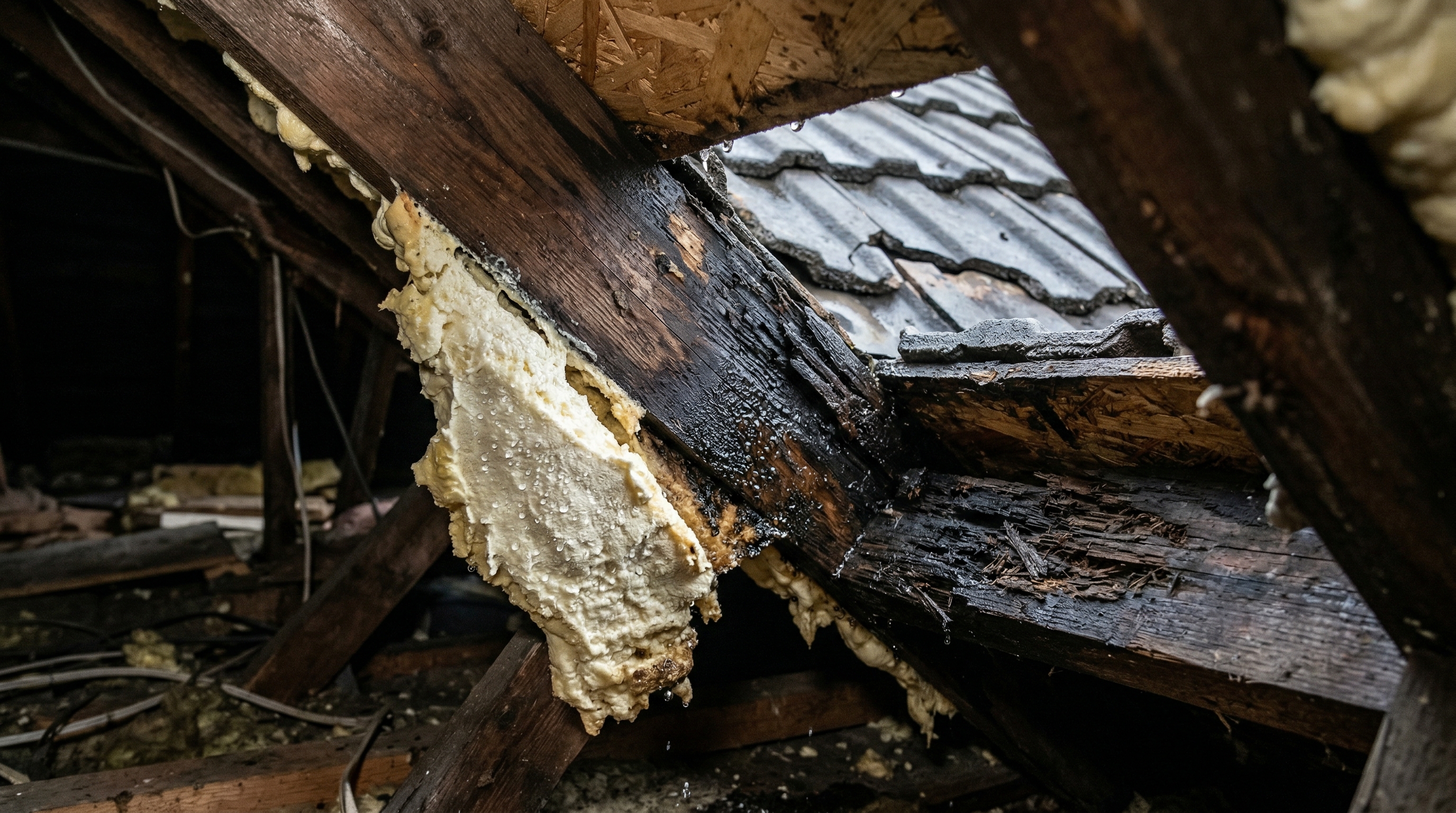

Whether you're dealing with problematic spray foam, contaminated mineral wool, or outdated vermiculite, there are many situations where removing and replacing loft insulation is the right decision. This guide covers every scenario, the costs involved, and how to ensure proper replacement.
When Does Loft Insulation Need Removing?
Spray Foam Insulation
The most common reason for loft insulation removal in is spray foam. If your loft has spray foam insulation, you'll likely need removal because:
- Mortgage lenders refuse to lend on properties with spray foam
- Timber rot develops hidden behind the foam
- Roof ventilation is compromised
- You need to sell your property
Spray foam removal requires professional specialists — see our guide to the spray foam removal process and cost breakdown.
Water-Damaged Insulation
Mineral wool that has been soaked by a roof leak loses most of its insulating properties and becomes a breeding ground for mould. Wet insulation should be removed and replaced once the source of the leak has been fixed.
Vermin-Contaminated Insulation
Rodent urine, droppings, and nesting material in loft insulation create health hazards. Contaminated insulation should be removed and replaced, ideally after pest control measures are in place.
Vermiculite (Potential Asbestos)
Vermiculite insulation installed before the mid-1980s may contain tremolite asbestos. If you suspect your vermiculite contains asbestos, do not disturb it — engage a licensed asbestos removal contractor for testing and, if necessary, safe removal.
Loft Conversion Preparation
Converting a loft into living space typically requires removing existing joist-level insulation and installing insulation between and over the rafters instead, following Part L building regulations.
Removal Costs by Insulation Type
- Mineral wool / fibreglass — £500-£1,500 (can be DIY)
- Spray foam (open cell) — £2,500-£5,000 (professional only)
- Spray foam (closed cell) — £4,000-£8,000 (professional only)
- Vermiculite (non-asbestos) — £1,000-£3,000
- Asbestos-containing material — £2,000-£5,000 (licensed contractor only)
The Removal Process
For Mineral Wool Insulation
- Wear a suitable dust mask (FFP3), gloves, goggles, and coveralls
- Roll up mineral wool batts carefully to minimise dust
- Bag in heavy-duty rubble sacks
- Dispose of responsibly at a local waste facility
- Vacuum any remaining fibres from the loft space
For Spray Foam Insulation
Professional spray foam removal follows a specific process — see our detailed removal guide.
Best Replacement Insulation Options
Mineral Wool (Recommended)
For most UK homes, mineral wool laid at joist level remains the best choice:
- 270mm total depth meets current Building Regulations Part L
- First layer (100mm) between joists, second layer (170mm) across joists
- Maintains cold roof ventilation — the proven UK approach
- Allows future inspection of roof structure
- Cost-effective: materials cost £300-£600 for a typical loft
PIR (Polyisopropylene) Boards
Rigid PIR boards are useful where loft boarding is needed over insulation:
- Higher R-value per inch than mineral wool
- Can support boarding for storage use
- More expensive: materials cost £600-£1,200 for a typical loft
Key Considerations
- Always maintain ventilation — whatever insulation you install, ensure eave-to-ridge airflow is maintained for cold roof construction
- Check for hazards before starting — test for asbestos if insulation predates the 1990s
- Don't compress insulation — squashed mineral wool loses effectiveness; use raised boarding systems if you need loft storage
- Insulate the hatch — the loft hatch is a major heat loss point; add insulation and draft stripping
- Pipe and tank insulation — with effective joist-level insulation, the loft space will be colder; ensure pipes and tanks are insulated to prevent freezing
If you're dealing with spray foam insulation and need professional removal, request your free assessment today. We provide comprehensive removal with post-removal certification.