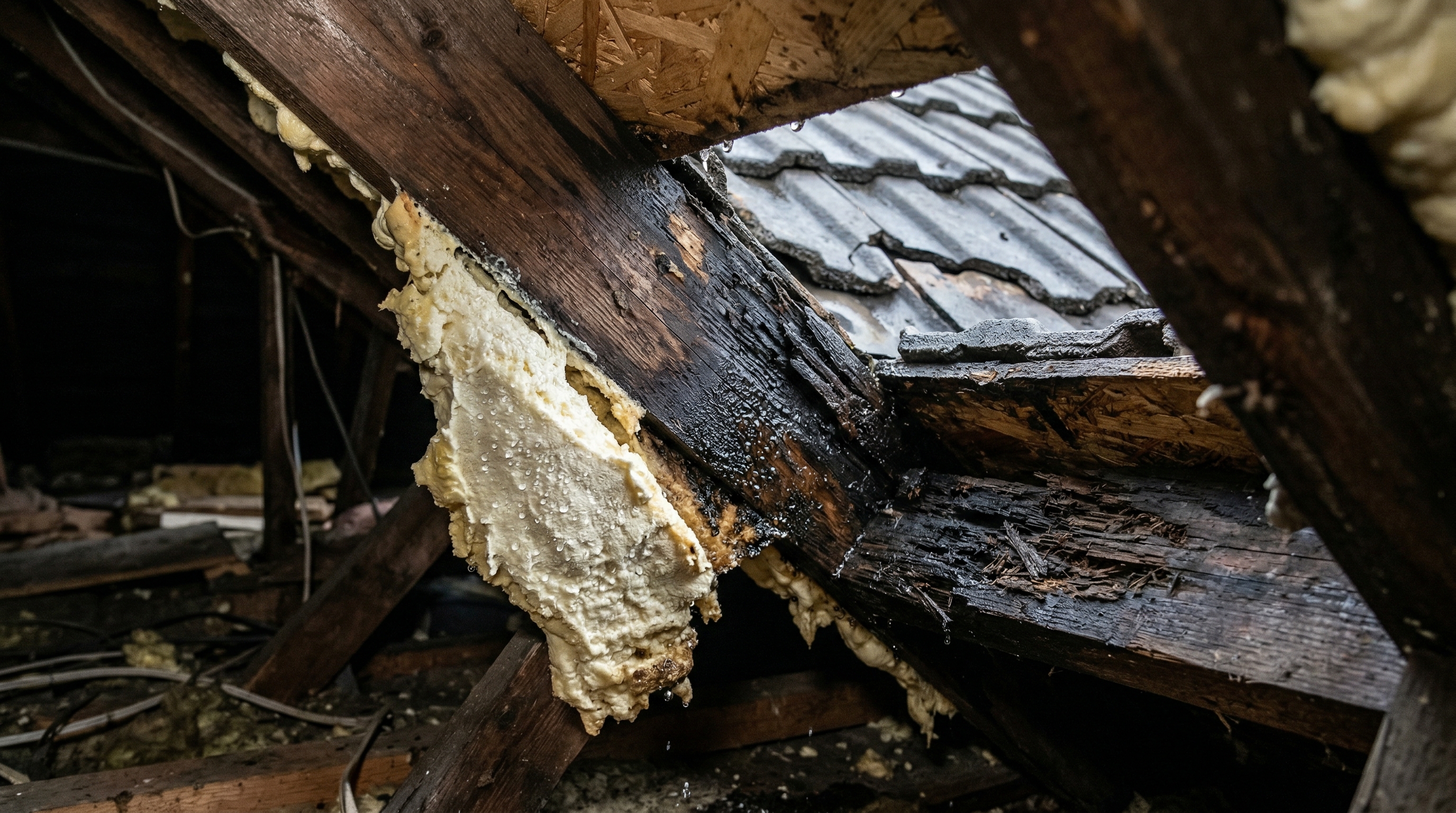

As spray foam insulation has come under increasing scrutiny for its impact on mortgages and roof structures, many homeowners are also asking: is spray foam insulation safe to live with?
This guide examines the genuine health considerations, separating fact from fear, so you can make informed decisions about the spray foam in your home.
The Chemicals in Spray Foam Insulation
Spray foam insulation is a polyurethane product created by mixing two chemical components:
- Component A (Isocyanate) — typically MDI (methylene diphenyl diisocyanate), a known respiratory sensitiser and irritant
- Component B (Polyol resin) — contains catalysts, blowing agents, flame retardants, and surfactants
When these components are mixed and sprayed, an exothermic chemical reaction occurs — the foam expands, heats up, and hardens. This curing process is where the primary health concerns arise.
Off-Gassing: What It Is and Why It Matters
Off-gassing refers to the release of volatile organic compounds (VOCs) and unreacted chemicals from the foam as it cures and ages. Understanding the timeline:
During Installation (Highest Risk)
- Isocyanate vapours are released during spraying — these are highly toxic
- Professional installers must wear full respiratory protection (SCBA or supplied air)
- The property must be evacuated during installation
- Pets and vulnerable individuals should be removed well before spraying begins
First 24-72 Hours (High Risk)
- The foam is still curing and releasing VOCs
- Strong chemical odours may be present
- Manufacturers recommend staying out of the property for at least 24 hours
- Adequate ventilation is essential before re-entry
First Few Weeks (Moderate Risk)
- Low-level off-gassing continues as the foam fully cures
- Chemical odours should diminish significantly
- Sensitive individuals may experience mild symptoms
Long-Term (Lower Risk)
- Properly installed and fully cured foam is considered chemically stable
- However, improperly mixed foam may never fully cure and can off-gas indefinitely
- Heat exposure (hot roof spaces in summer) can accelerate chemical release
Health Symptoms to Watch For
If you suspect your spray foam insulation is affecting your health, watch for these symptoms:
- Respiratory — coughing, wheezing, shortness of breath, asthma-like symptoms
- Nasal — runny nose, congestion, sinus irritation
- Eye — itching, watering, redness
- Neurological — headaches, dizziness, difficulty concentrating
- Dermatological — skin rashes or irritation (from direct contact)
These symptoms are more likely if:
- The foam was improperly mixed (incorrect ratio of components A and B)
- The loft space is not adequately sealed from the living space below
- You have pre-existing respiratory conditions or chemical sensitivities
- The property has poor overall ventilation
When Does Spray Foam Become a Health Concern?
The foam is most likely to be a health concern when:
- Improperly installed — incorrect mixing ratios leave unreacted chemicals in the foam that may never fully cure
- Applied too thickly — excessive thickness generates more heat during curing, potentially causing charring and chemical degradation
- Poorly ventilated loft — if the loft space connects to living areas through gaps around downlights, loft hatches, or pipe penetrations
- Fire damage — burning polyurethane releases highly toxic hydrogen cyanide and carbon monoxide fumes
What Should You Do?
If you're concerned about the safety of spray foam in your property:
- Check ventilation — ensure your loft hatch seals properly and there are no air gaps between the loft and living space
- Monitor symptoms — keep a record of any health symptoms and whether they improve when you're away from home
- Consult your GP — if you're experiencing persistent respiratory or other symptoms
- Consider removal — if health concerns combine with mortgage problems or structural concerns, professional removal addresses all issues simultaneously
For professional advice on spray foam removal, request a free assessment.