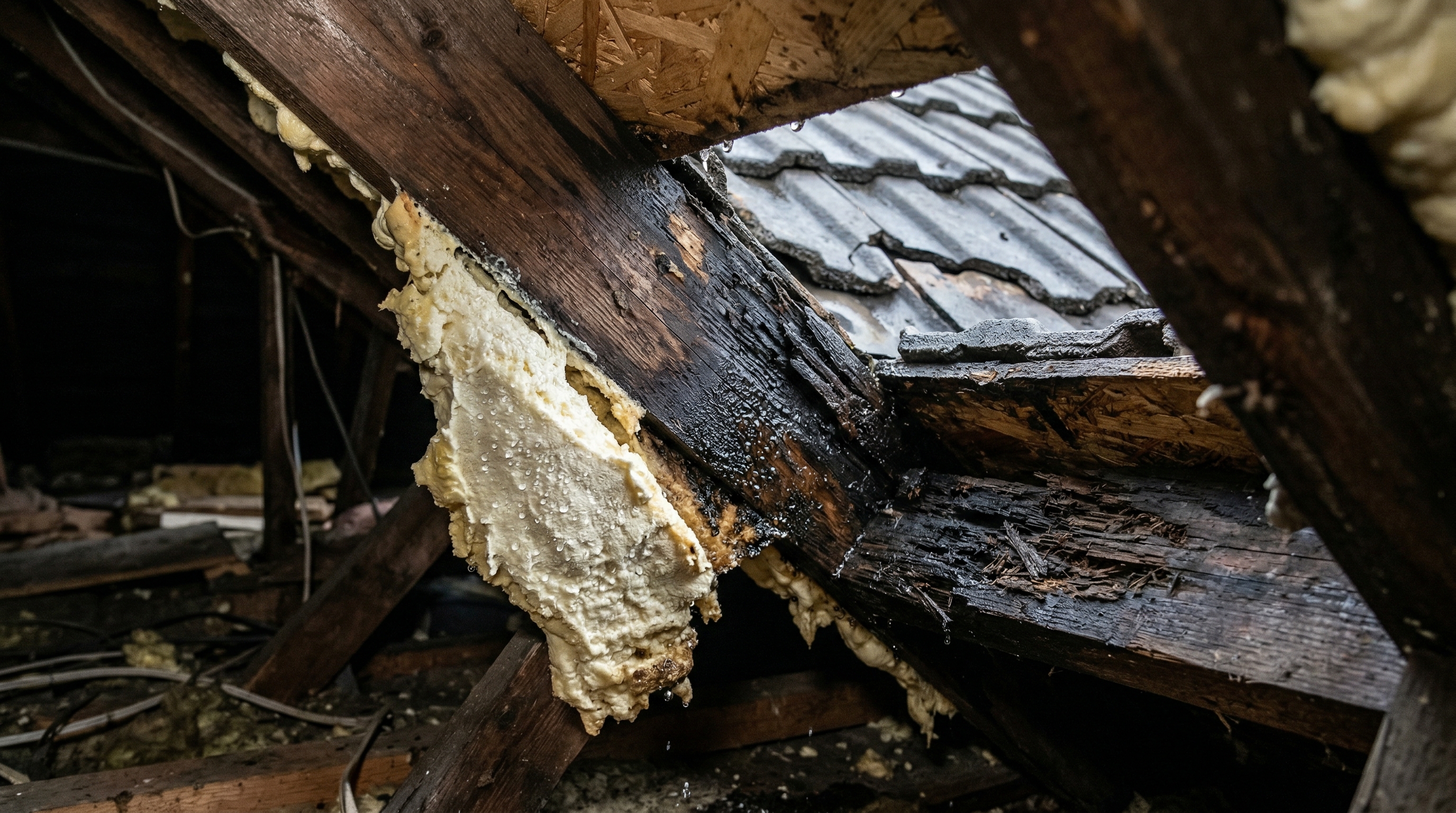

Spray foam insulation applied to UK roofs is causing widespread problems that homeowners are only now discovering — often years after installation. From condensation and timber rot to tile damage and ventilation failure, the consequences of spray foam in a roof space can be severe and expensive.
How UK Roofs Are Supposed to Work
Before understanding why spray foam causes problems, it helps to understand how a healthy UK roof functions:
- Ventilation — air enters at the eaves (soffits) and exits at the ridge, creating a constant flow that removes moisture
- Moisture management — breathable roofing membranes allow moisture vapour to escape outward while preventing rain ingress
- Temperature regulation — the ventilated void above the insulation (typically at joist level) keeps the roof structure at ambient temperature
- Movement — timber roof structures naturally expand and contract with temperature and humidity changes
Spray foam insulation fundamentally disrupts every one of these processes.
The Five Major Roof Problems Caused by Spray Foam
1. Condensation and Moisture Trapping
When spray foam is applied to the underside of roof tiles or between rafters, it creates a sealed environment where moisture cannot escape. Warm, humid air from the house below rises into the loft space and meets the cold surface of the foam or the areas around it. The result is condensation — water forming on surfaces that were previously kept dry by ventilation.
This condensation accumulates over months and years, soaking into timber rafters and purlins, where it causes rot and structural weakening.
2. Timber Rot and Structural Decay
The trapped moisture from condensation creates ideal conditions for wood rot fungi. Unlike a visible leak that can be spotted and fixed quickly, spray foam hides the moisture damage — by the time rot is visible at the edges of the foam, it may have been progressing undetected for years.
Signs of timber rot behind spray foam include:
- Soft, spongy timber at foam edges when pressed
- Dark staining on exposed timber surfaces
- Visible fungal growth at junctions between foam and timber
- Sagging or deflection in roof lines (visible from outside)
3. Tile Adhesion and Repair Prevention
Spray foam bonds permanently to roof tiles, battens, and membranes. This creates a rigid, glued structure where individual components cannot be accessed or replaced. The consequences include:
- Broken tiles cannot be replaced without removing foam from a large surrounding area
- Lead flashings cannot be maintained or replaced
- Valley gutters become inaccessible for cleaning and repair
- Re-roofing becomes massively more expensive and disruptive
4. Ventilation Failure
By sealing the eave-to-ridge airflow path, spray foam eliminates the natural ventilation that UK roofs depend on. Even if soffit and ridge vents are physically present, the foam blocks the air pathway between them. Without ventilation, the cold roof void becomes a trap for moisture, heat, and stale air.
5. Survey and Insurance Complications
RICS surveyors cannot properly inspect a roof covered in spray foam. This means:
- Mortgages are refused because the lender cannot be assured of the roof's condition
- Insurance claims for roof damage may be complicated or refused
- Building warranty providers may void coverage
Warning Signs Your Roof Has Problems
Watch for these indicators that spray foam is causing damage to your roof:
- Damp patches on ceilings below the loft space
- Musty or damp smells when you enter the loft
- Visible mould on any exposed surfaces in the loft
- Dripping or wet patches inside the loft, especially in cold weather
- Foam discolouration — darkening, yellowing, or brown staining
- Foam detachment — sections of foam pulling away from surfaces
What You Should Do
If you suspect your spray foam is causing roof problems:
- Don't ignore it — roof problems from spray foam get worse over time, never better
- Get a professional assessment — contact a certified removal company to evaluate the situation
- Understand your options — professional removal costs are a fraction of the potential structural repair bill if problems are left to escalate
- Consider the full picture — if you also face mortgage problems or plan to sell your property, removal addresses all issues at once