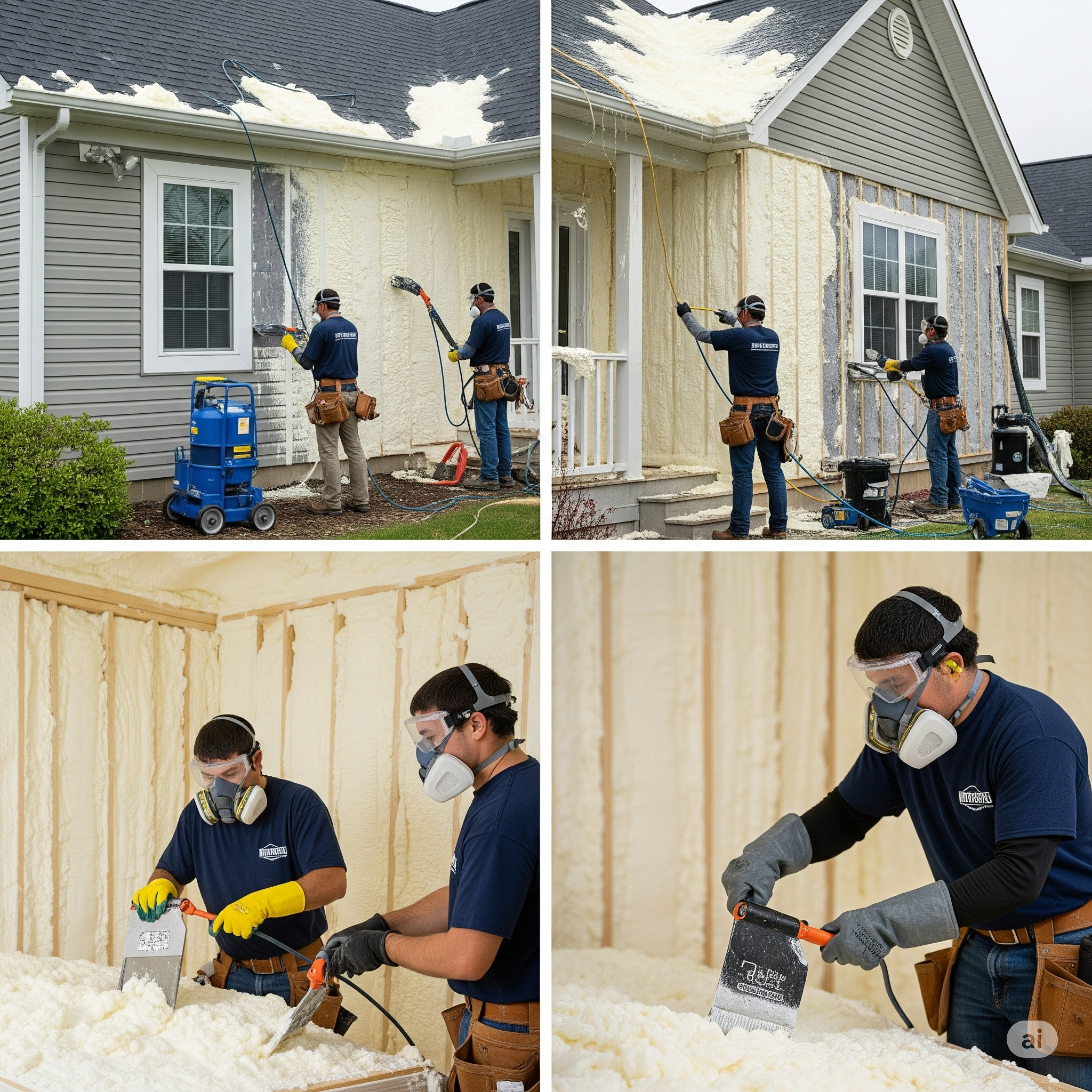

Quick answer: proceed, but treat the spray foam as a live negotiating point rather than a reason to walk away on the spot. A foam-insulated loft doesn't automatically make a house unmortgageable, and plenty of buyers complete on these properties every month. What it does is change the maths on your offer, your survey, and your mortgage application.
Before you go further, you need to know what the surveyor will actually be able to tell you, how lenders react to spray foam, and what leverage you genuinely have at the table.
What the survey will tell you — and what it won't
If your solicitor or estate agent has flagged spray foam in the loft, your surveyor already knows to look for it. RICS published its consumer guide on spray foam insulation in March 2023, and most surveyors now note its presence as standard on a Level 2 (HomeBuyer) or Level 3 (Building Survey) report.
Here's the problem: a standard visual survey can tell you foam is present and roughly how it's been applied, but it can't tell you what's underneath it. Closed-cell foam bonds directly to the roof timbers and sarking felt, which means the surveyor cannot see whether the rafters are sound, rotting, or already damaged by trapped moisture. Open-cell foam is slightly more forgiving because it's more vapour-permeable, but it still obscures the timber from view.
In practice, most surveyors will do one of three things: recommend a specialist spray foam inspection before exchange, mark the report as "unable to comment on condition of timbers," or, in the case of a full Building Survey, recommend removing a small test section so the timbers can be inspected directly. Expect a specialist inspection to cost £300–£600 on top of your standard survey fee. Read the surveyor's wording carefully — vague caution ("further investigation recommended") is very different from a hard red flag ("evidence of active timber decay").
If you haven't yet booked your survey, ask your surveyor directly, before instructing them, whether they're comfortable reporting on a spray foam property and whether they'll need to bring in a specialist. Not every local surveyor has experience with this, and a generic desktop valuation from the lender's own panel surveyor is not a substitute for a proper physical inspection — see our guide on how spray foam affects your mortgage for more on the difference.
The mortgage and valuation problem
This is where most buyers get caught out, because the survey and the mortgage decision are two separate hurdles.
As things stand, TSB's stated policy is a complete ban on lending against any property with spray foam insulation, with no exceptions regardless of survey findings. Nationwide, Skipton Building Society, Leeds Building Society and Yorkshire Building Society currently reject spray foam properties outright in the vast majority of cases too. Halifax, Santander, Barclays and NatWest sit in a conditional category: they may lend if a specialist survey (often a PCA-compliant report, typically £800–£1,500) comes back clean, but rejection after that outlay is common enough that it shouldn't be treated as a formality. Lender policies on spray foam shift without notice, so treat this as a snapshot rather than a guarantee — always confirm the current criteria with a mortgage broker or the lender directly before you act on it. Our full breakdown of which lenders accept spray foam covers the current position lender by lender.
Two things follow from this. First, if you're buying with a mortgage, you need to know which lender you're using and their specific policy before you get too far into the process — a mortgage broker who's dealt with spray foam cases before is worth the fee. Second, even if a lender agrees to proceed, the surveyor may apply a "retention" — holding back part of the loan amount until the foam is removed or a specialist certificate is provided — or down-value the property to reflect the cost and risk of removal. A down-valuation of £5,000–£15,000 against the agreed price is not unusual once a lender's valuer has factored in remedial work.
If you're a cash buyer, none of this applies directly to your purchase, but it will apply to whoever buys the house from you next — which is exactly why it still belongs in your negotiation.
Questions to ask the seller before you commit
Get these answered in writing, ideally through the seller's solicitor as part of the enquiries process, before you're locked into a position:
- Who installed the foam, and when? A lot of installations date to 2020–2021, when the Green Homes Grant subsidised loft and cavity insulation work and a wave of installers entered the market quickly. Installation age matters for both condition and paperwork.
- What type of foam is it — open-cell or closed-cell? Closed-cell is harder and more expensive to remove, and more likely to trigger a lender's caution.
- Is there an installation certificate, and was the installer registered with a recognised scheme (TrustMark, NIA, or similar) at the time? No paperwork is itself a warning sign.
- Has the property been marketed or valued before, and did a previous buyer's mortgage application fail because of the foam? Estate agents and sellers are obliged to disclose material information that could affect a buyer's decision — ask directly.
- Is there any warranty or insurance-backed guarantee still in place, and is it transferable to a new owner?
- Has a damp or timber survey ever been carried out on the roof space since installation?
- Why was the foam installed in the first place — energy bills, a cold room, a sales pitch from a door-to-door installer? The reason often tells you how well it was specified for the property.
Negotiating a price reduction
This is where the numbers actually matter. Professional spray foam removal typically costs £3,000–£7,000 for an average semi-detached loft, rising toward £15,000+ if timber repairs or a full roof restoration turn out to be needed once the foam comes off. Our removal cost guide breaks this down by region and property size — pull the relevant figures before you go back to the seller.
A workable approach: get one or two indicative removal quotes (many removal companies will give a ballpark from photos and loft dimensions without a site visit), then present the seller with a specific, sourced number rather than a vague request for "a bit off." Structure your revised offer around the removal cost plus a contingency for timber repair — asking for the full lower-end removal estimate (£3,000–£4,000) is reasonable and defensible; asking for the top of the range assumes damage nobody has confirmed yet, and sellers will push back on that.
Make your offer conditional on the survey findings, not just the presence of foam. If the surveyor comes back with a clean report and no evidence of timber problems, you have a strong case for the removal-cost reduction alone. If they flag active decay or moisture damage, that's a separate and larger conversation — potentially a much bigger reduction, or grounds to walk away.
Sellers who installed the foam through the Green Homes Grant scheme, or who've already had one sale fall through because of it, are often more realistic about price than first-time sellers who don't yet understand the mortgage implications. Don't be afraid to point them toward the lender list if they're pushing back — it's publicly available information, and it's in their interest to understand it too.
When to walk away
Not every spray foam property is worth pursuing, even with a discount. Be more cautious, or consider withdrawing, if:
- The surveyor reports evidence of active timber rot or structural movement rather than just "unable to inspect."
- The seller refuses to allow a specialist inspection or removal-company site visit before exchange.
- The property is listed (Grade II or above), where removal work may need additional consent and cost significantly more.
- You're on a tight completion timeline — removal and any follow-on repair work adds weeks to months before a property is genuinely "clean," and you may need it done before you can remortgage or sell on.
- The asking price hasn't moved at all despite the foam being a known, disclosed issue — that's usually a sign the seller isn't being realistic about the market.
- You'd be relying on a specialist lender with a higher rate and a large deposit requirement just to get the deal done at all, rather than removal being a genuine option within your budget.
If you proceed: removing it after you buy
If the numbers work and the survey doesn't raise structural red flags, buying and removing the foam post-completion is a well-trodden path. A typical professional removal takes two to five days depending on loft size and access, and reputable removal firms will also arrange a post-removal certificate — this is the document your future buyer's lender will actually want to see. See our guide to certificates for mortgage lenders and our directory of vetted removal companies for what to look for.
Budget for the removal itself, a contingency for whatever the surveyor couldn't see, and the cost of reinstating proper roof ventilation, which is often overlooked and can run to £800–£2,500. If you're planning to remortgage or sell again within a few years, get the removal and certificate sorted early rather than leaving it as "something to deal with eventually" — the mortgage problem doesn't go away on its own, and it becomes your problem the moment you complete.
Weighing up an offer on a spray foam property? Compare quotes from vetted removal specialists to get a real number for your negotiation.
Get Free Removal QuotesFrequently Asked Questions
Will I struggle to get a mortgage on a house with spray foam insulation?
It depends entirely on the lender, and their positions can change. As things stand, TSB will not lend on any spray foam property, and Nationwide and several building societies also reject outright. Halifax, Santander, Barclays and NatWest may lend after a specialist survey, but rejection after paying for that survey is common. Speak to a broker with current spray foam experience before you commit to a lender, since policies are updated without warning.
Can I get a mortgage if I plan to remove the foam after completion?
Some lenders will consider this on a case-by-case basis, sometimes with a retention held back until removal is complete and a certificate is provided. This needs to be agreed with the lender before exchange, not assumed.
How much should I ask the seller to knock off the price?
Base it on an actual removal quote rather than a guess. £3,000–£7,000 covers most standard lofts; get a specific figure for the property in question and present that, ideally with the quote attached to your offer.
Does spray foam insulation actually cause damage, or is it just a paperwork problem?
Both are possible. Poorly installed foam, especially closed-cell foam applied to a roof without adequate ventilation, can trap moisture against the timbers and cause rot over time. Well-installed foam on a well-ventilated roof may cause no physical damage at all — but the inability to inspect the timbers is a problem for lenders either way.
Should I pull out of the purchase entirely?
Not necessarily. Pulling out makes sense if the survey finds active structural damage, the seller won't cooperate with further inspection, or the numbers no longer work once you've priced in removal and repair. If the survey is otherwise clean and the seller is willing to negotiate on price, most buyers proceed.
Is it cheaper to negotiate a price reduction or ask the seller to remove the foam before completion?
Usually cheaper and simpler for you to negotiate the reduction and arrange removal yourself after completion. Sellers rushing to remove foam before a sale sometimes use the cheapest available contractor, and you'll want to choose your own removal company and get your own certificate in your name.
Will removing the spray foam definitely restore full mortgage eligibility?
For most major lenders, yes — a professional removal with a proper post-removal certificate restores normal lending terms. It's the single most reliable route back to a standard mortgage market, rather than relying on the small pool of specialist lenders.