
If a lender has just turned you down, or you are about to apply and someone has mentioned the foam in your loft, the question you actually want answered is simple: who will lend on this house?
The honest answer is that around 70-80% of the UK mortgage market declines outright on properties with spray foam insulation, and a smaller number of building societies and specialist lenders will consider an application with conditions attached. That is the shape of it. What follows is why, what the conditions tend to be, and how to get a straight answer about your own lender rather than a guess about lenders in general.
Why won't lenders touch it?
There is no ban on spray foam. It is legal to install and legal to own. The barrier is lending, not legality, and that distinction matters because it tells you what has to change.
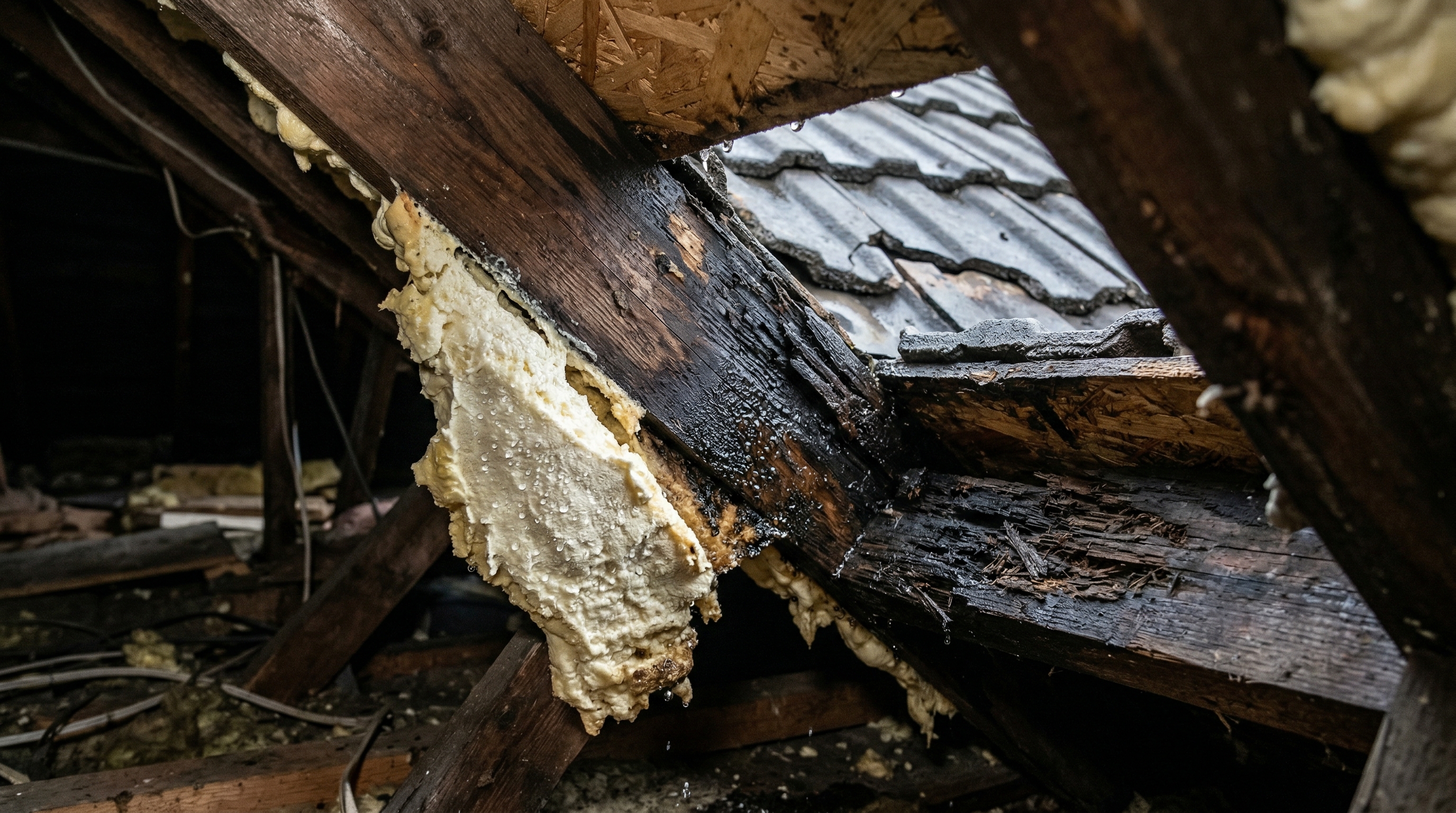
A surveyor valuing your house needs to see the roof timbers. Spray foam applied to the underside of the roof covers them. Once they are covered, nobody can confirm whether the rafters are sound, whether there is rot starting, or whether the roof is ventilating properly. The surveyor cannot sign off on what they cannot see, so the valuation comes back qualified or the lender declines.
That is the whole mechanism. It is not that lenders believe spray foam is dangerous. It is that they cannot price a risk they cannot inspect, and a mortgage is a thirty-year bet on the building still standing.
Why we don't publish a lender-by-lender list
You will find plenty of pages promising a definitive table of which banks say yes and which say no. Treat them carefully.
Lender criteria on spray foam change often, they are frequently applied case by case rather than as blanket policy, and the person who actually decides is a surveyor standing in your loft — not a rule in a manual. A table that was accurate in January can be wrong by June, and a table that was never accurate reads exactly the same.
We would rather tell you how to get a current answer than hand you a list that might cost you an application.
How to find out for your own lender, properly:
- Ask your broker to check criteria directly, naming spray foam and specifying whether it is open-cell or closed-cell, and whether it is on the roof underside or between joists. The answer often differs by type and location.
- Ask what evidence would change the answer. This is the question most people skip, and it is the one that gets you somewhere.
- Get it in writing. Verbal reassurance from a call centre is not criteria.
If you do not have a broker, a whole-of-market one is worth it here specifically because they can check several lenders' criteria without you making several applications — and multiple declined applications are their own problem.
What "lending with conditions" usually means
Where a lender will consider a spray foam property, the conditions tend to fall into a few categories:
| Condition | What it means in practice |
|---|---|
| Specialist survey | An independent inspection of the roof structure, at your cost, on top of the standard valuation |
| Lower loan-to-value | A larger deposit, because the lender is pricing in uncertainty |
| Higher rate | You are outside standard criteria, so you pay for it |
| Retention | Part of the loan held back until work is completed and evidenced |
| Removal before completion | The most common one, and the most final |
None of these are unusual in themselves. What is unusual is being offered them at all — most of the market simply says no first.
The thing that actually changes the answer
Removal, evidenced properly.
Once the foam is out and the timbers can be inspected, the objection disappears, because the objection was never really about the foam. It was about the inspection. A property with the foam removed and documented is an ordinary property again, and the whole market reopens.
What lenders want to see is not just that the work happened, but that it happened properly and that somebody competent looked at the roof afterwards. In practice that means:
- Full mechanical removal, done by hand rather than with chemicals or heat
- Photographic evidence of the timbers once exposed
- Moisture readings on the roof timbers
- Waste transfer documentation
- A removal certificate and condition report
The certificate is the part your lender actually reads, so it is worth understanding what a good one contains before you commission anyone.
What it costs to get back into the market
Professional spray foam removal costs £3,000-£8,500 in the UK, or £50-80 per square metre, depending on property size, whether the foam is open-cell or closed-cell, and how awkward the loft is to work in. Most three-bedroom properties take 2-5 days.
Open-cell foam sits at the lower end of the per-metre rate because it is softer and faster to strip. Closed-cell is denser and bonds harder to the timber, so it sits at the top. There is a fuller breakdown on our removal cost page.
Timber repairs, if any are needed once the foam is off, are a separate cost and cannot honestly be quoted until somebody can see the wood.
Is removal always the right answer?
No, and we would rather say so.
If you have no plans to move, remortgage or borrow against the property, the mortgage problem is theoretical. Spray foam does insulate well; that part was never in dispute. The calculation changes entirely the moment you need the house to be sellable or refinanceable — and it changes with very little warning, which is the real risk of leaving it.
Where it does need to come out, the sequence that causes the fewest problems is: establish what your lender needs, get the work done to that standard, then apply. Doing it in the other order is how applications get declined twice.
Frequently asked questions
Which lenders definitely accept spray foam insulation?
No lender treats spray foam as a non-issue. Around 70-80% of the market declines outright, and the remainder consider it case by case with conditions such as a specialist survey, a larger deposit or removal before completion. Any list claiming a firm yes should be checked against current criteria through a broker before you rely on it.
Does it matter whether the foam is open-cell or closed-cell?
It can affect the removal cost and how a surveyor describes the risk, because closed-cell is denser and harder to strip. It does not reliably change whether a lender will lend — the core objection is that the timbers cannot be inspected, and that applies to both.
Will removing the foam guarantee my mortgage is approved?
It removes the spray foam objection. It cannot guarantee approval, because affordability, credit history and the rest of the valuation still apply. What removal does is put you back in the ordinary market rather than a shrinking corner of it.
My lender approved it years ago — why is it a problem now?
Criteria tightened considerably as the scale of installation became clear. Around 250,000 UK homes are estimated to have spray foam, and a decision made when it was rare is not a guide to a decision made now.
Can I just not mention it?
The surveyor will go into the loft. Beyond that, non-disclosure on a mortgage application is a serious matter in its own right. It is not a route worth considering.