The blunt answer
Yes, you can sell a house with spray foam insulation. But the buyer pool shrinks dramatically, and the price you get will reflect that.
Most UK buyers need a mortgage. Most mortgage lenders reject properties with spray foam on the roof timbers. That leaves you selling to cash buyers, and cash buyers know they have leverage. We regularly hear from homeowners who have been offered 25 to 40 percent below market value because the buyer knows no one else can complete.
There is an alternative: get the foam removed before you list. It costs money upfront, but it typically recovers far more than it costs in final sale price. More on that below.
Why spray foam kills house sales
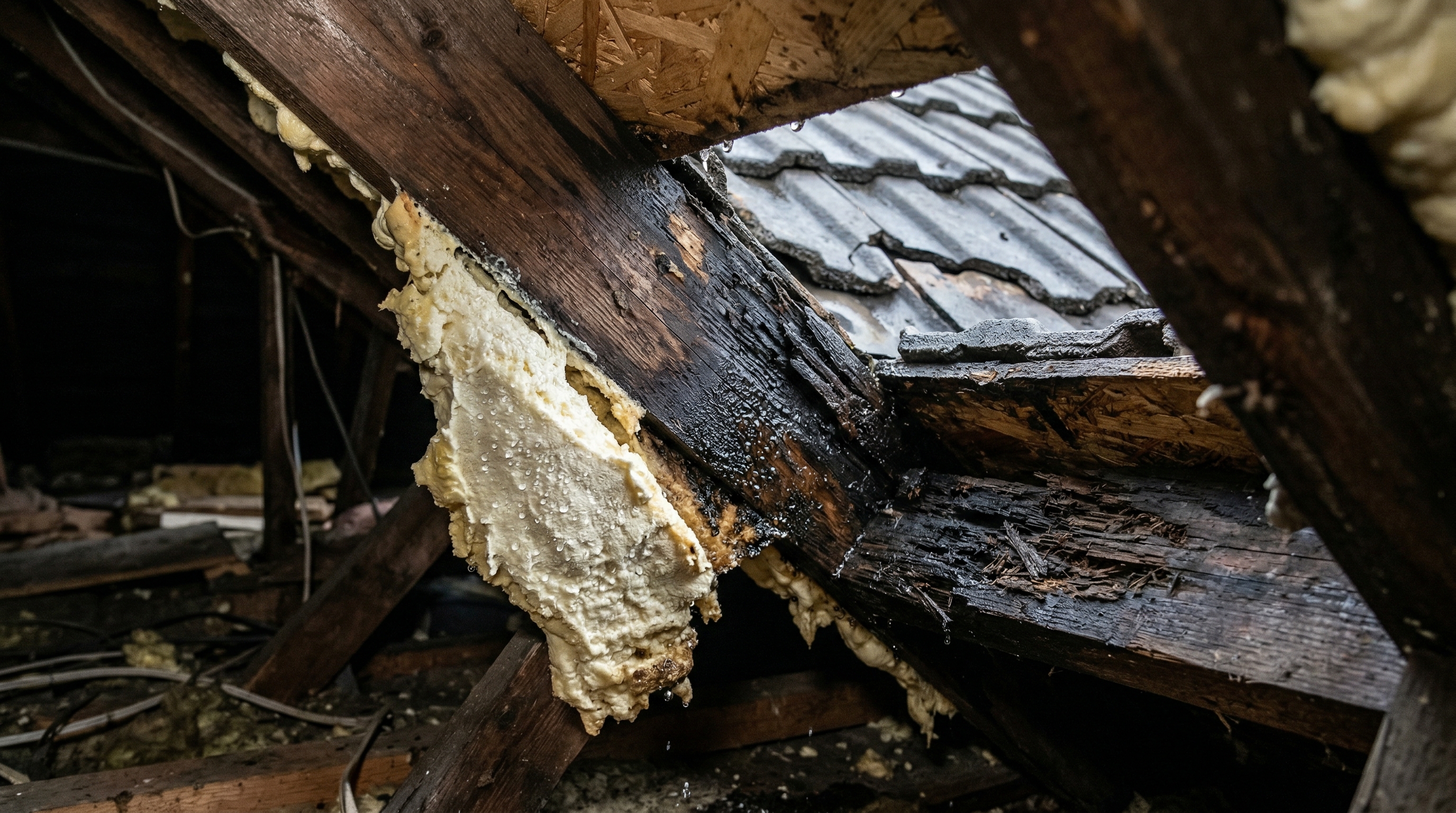
When a buyer applies for a mortgage, the lender sends a surveyor to assess the property. If the surveyor finds spray foam on the roof timbers, the valuation report flags it as a material defect. The mortgage is declined.
This is not one or two lenders being cautious. It is virtually the entire mainstream lending market. Halifax, Nationwide, Barclays, NatWest, Santander, TSB, HSBC, Virgin Money — all refuse to lend on spray foam properties. The Royal Institution of Chartered Surveyors advises its members to flag spray foam as a concern during valuations.
What happens next depends on how the sale is structured:
- Buyer's mortgage declined: The sale falls through unless the buyer can switch to a cash purchase or specialist lender (unlikely for most buyers)
- Property relisted: The spray foam issue is now known to the market. Estate agents start managing expectations on price
- Cash buyer offer: Typically 20 to 40 percent below what the property would fetch on the open market with full mortgageability
We spoke to one couple in Manchester who had three sales collapse in a row before they arranged removal. The fourth buyer completed within six weeks of the foam being taken out. They sold at asking price.
Do you have to disclose spray foam when selling?
Yes. If you know spray foam insulation is present, you must declare it on the TA6 property information form. Specifically, question 7.4 asks about alterations and changes to the property. Spray foam is a material alteration.
Trying to hide it is not just unethical — it is potentially fraudulent. If a buyer discovers undisclosed spray foam after completion, they can pursue you for misrepresentation. Solicitors we work with have seen these claims succeed, with sellers ordered to pay the cost of removal plus legal fees.
The surveyor will find it anyway. A quick look through the loft hatch is standard practice during any mortgage valuation. Boarding over the foam or clearing a visible section does not work — surveyors are trained to spot it.
Your three realistic options for selling
Option 1: Remove the foam before listing (recommended)
This is the approach that works best for the vast majority of sellers we advise. Have the foam professionally removed, get an independent certificate, and list the property as normal. Buyers can get standard mortgages, you get full market value, and there are no complications during the sale.
The cost of removal is typically £2,000 to £8,000 depending on property size and foam type. For a property worth £250,000, that is a fraction of the 25 to 40 percent discount a cash buyer would demand.
Our removal includes independent RICS surveyor sign-off as standard — we are the only removal service in the UK that provides this. Other removal companies issue their own certificates, which is essentially them confirming their own work was done properly. Our certificates are verified by an independent RICS surveyor, which is what mortgage lenders actually want to see. That distinction matters when your sale depends on the certificate being accepted first time.
Option 2: Sell to a cash buyer at a discount
If you need to sell quickly and cannot wait for removal, a cash buyer is an option. But go in with realistic expectations. Cash buyers for spray foam properties are often investors or developers who will factor in removal costs, their own profit margin, and the hassle factor. Expect offers around 60 to 75 percent of market value.
Option 3: Sell and offer a price reduction for removal
Some sellers negotiate a price reduction equivalent to the removal cost and let the buyer arrange removal after completion. This can work, but it is risky. The buyer needs to be a cash buyer (or use a specialist lender), and you are relying on them to actually arrange removal. Most solicitors advise against this approach because it creates unnecessary complexity.
How removal restores your property's value
Once spray foam is professionally removed and you have an independent certificate confirming the timber is clear and structurally sound, the property is mortgageable again. Full stop.
The estate agent can market it to the full buyer pool. Mortgage valuations proceed without issue. There is nothing to disclose because the problem has been resolved and documented.
We have helped over 5,000 homeowners through this process. In every case where removal was completed and certified before listing, the property sold at or near its full market value. The removal cost is an investment that pays for itself several times over.
Timeline for selling after spray foam removal
If you are planning to sell, here is a realistic timeline:
| Stage | Timeframe | What happens |
|---|---|---|
| Free loft assessment | Within 48 hours | We inspect your loft and provide a fixed-price quote |
| Foam removal | 1-5 days on site | Complete removal, timber inspection, any remediation needed |
| RICS surveyor sign-off | Within 1 week | Independent RICS surveyor verifies the work and issues certificate |
| List property | Immediately after | Full market exposure, all buyers eligible |
From first contact to having a certificate in hand, most homeowners are ready to list within 2 to 3 weeks.
Frequently asked questions
Will spray foam affect my house valuation?
Yes. If a surveyor identifies spray foam during a mortgage valuation, the property will either be downvalued significantly or flagged as unmortgageable. For insurance or informal valuations, the impact depends on the valuer, but most will note it as an issue affecting saleability.
Can I sell to a first-time buyer if my house has spray foam?
Almost certainly not. First-time buyers typically need a 90 or 95 percent mortgage. No mainstream lender will approve that mortgage on a spray foam property. The buyer would need to purchase with cash, which is unrealistic for most first-time buyers.
What if the spray foam was installed by the previous owner?
You still have to disclose it if you know about it. The fact that you did not install it does not change the material impact on the property. If you are buying a property and discover spray foam, you have strong grounds to renegotiate the price or ask the seller to arrange removal before completion.
Is it worth removing spray foam to sell, or should I just accept a lower price?
The maths almost always favours removal. Removal costs £2,000 to £8,000. Selling at a cash-buyer discount on a £250,000 property costs you £60,000 to £100,000. Even on a £150,000 property, the discount far exceeds the removal cost.
Do estate agents need to know about spray foam?
Yes. Your estate agent has a duty to not misrepresent the property. If they know about spray foam, they must disclose it. A good agent will advise you to arrange removal before listing, because it makes the property far easier to sell.
Selling a spray foam property? Talk to us first.
We have helped over 5,000 homeowners restore their properties to full mortgageability. Get a free assessment and find out how quickly we can resolve this for you.
Get Free Quotes